
The Major Oak Has Died — What It Teaches Us About Caring for the Trees in Our Own Gardens
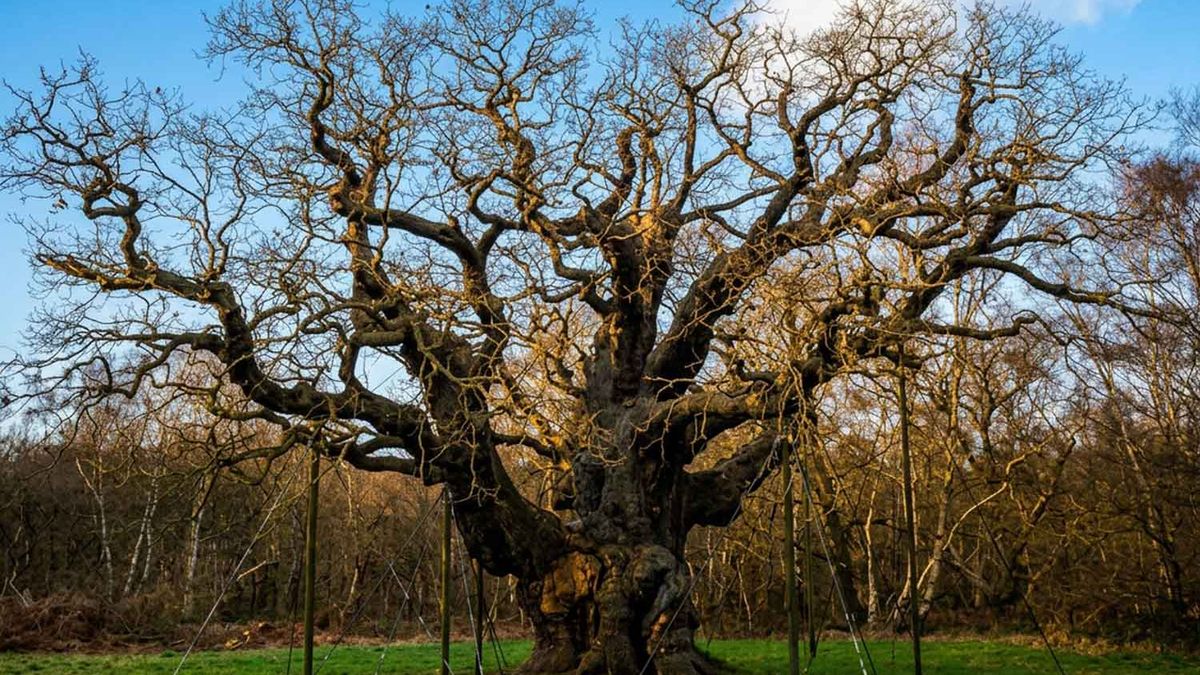
This week brought sad news for tree lovers across the country. The Major Oak in Sherwood Forest, the 1,200-year-old tree famously linked to the legend of Robin Hood, has died after failing to produce a single leaf this spring. It is thought to be one of the oldest and most celebrated oaks in Britain, and its loss has been described by the RSPB, which manages the woodland, as “heartbreaking for everyone.”
What makes this story so striking isn’t just the tree’s age or its place in folklore. It’s the cause. The Major Oak wasn’t felled, struck by lightning, or lost to disease overnight. According to the RSPB, it was, in effect, loved to death, millions of visitors over two centuries compacted the soil around its roots until it became almost as hard as concrete, leaving rainwater unable to soak in and roots unable to breathe or draw up nutrients. Several recent heatwaves and droughts, including the record-breaking summer of 2022, finished what decades of foot traffic had started.
It’s a sobering reminder that even the toughest, most ancient trees are not invincible, and that the slow, quiet stresses we don’t notice day to day are often what does the real damage. The good news is that the very same principles that could have helped the Major Oak are the ones that keep ordinary garden and street trees healthy for decades, and sometimes generations. Here’s what every tree owner can learn from it.
Why Trees Like the Major Oak Decline, and Why It Matters for Your Garden
Most tree decline doesn’t happen overnight. It builds up gradually, often from a combination of stresses that, on their own, a tree could shrug off but together become too much. For the Major Oak, the main culprits were:
- Soil compaction, heavy foot traffic compresses soil, squeezing out the air pockets roots need and stopping rain from reaching them.
- Root damage, roots extend far beyond a tree’s canopy, and digging, paving, or even repeated trampling above them can cause damage that takes years to show.
- Drought stress, hot, dry summers put extra strain on a tree’s ability to take up water, especially if its roots are already compromised.
- Old, unmanaged growth, ancient trees can carry decades of deadwood and overextended limbs that put unnecessary strain on the structure.
The same factors affect garden trees, just on a smaller scale. A tree in a driveway, a patio, or a regularly mown lawn can experience its own version of soil compaction. A tree that’s never been pruned can develop the same kind of structural strain that ancient oaks suffer from after centuries of neglect.
How to Care for Your Trees So They Last for Generations
With the right care, trees can live for hundreds of years, in fact, RSPB staff have said that even now, the Major Oak’s standing trunk could remain part of the forest for decades or centuries to come. Here’s how to give your own trees the best chance of a long, healthy life:
1. Protect the root zone
A tree’s roots typically spread at least as wide as its canopy, often further. Avoid compacting the soil above them with heavy machinery, repeated foot traffic, or parked vehicles, and think carefully before digging, paving, or laying new driveways nearby. Mulching around the base (not piled against the trunk) helps keep soil loose, retains moisture, and feeds the soil with organic matter as it breaks down.
2. Water deeply during dry spells
Establishing trees and even mature ones can suffer in prolonged heat and drought, just as the Major Oak did. A slow, deep soak at the base every week or two during a dry summer is far more effective than a quick daily sprinkle, which only wets the surface.
3. Get regular health checks
Many of the problems that eventually kill trees, decay, pest damage, root issues, structural weaknesses, are far easier to manage if they’re caught early. A periodic inspection by a qualified arborist can spot warning signs long before they become visible from the ground, such as thinning canopy, dieback, fungal growth, or cracks in major limbs.
4. Prune and crown-manage proactively
This is one of the most effective things you can do for a tree’s long-term health, and it’s where techniques like crowning come in (more on that below). Removing dead, diseased, or crossing branches reduces strain on the whole structure, improves airflow and light penetration, and lowers the risk of storm damage or limb failure.
5. Avoid changing the environment too quickly
Trees adapt slowly. Sudden changes nearby, such as new construction, changes in drainage, soil level changes, or removing neighbouring trees that were providing shelter, can shock a tree’s system. If building or landscaping work is planned near a mature tree, it’s worth getting professional advice first on how to protect its roots and canopy during the work.
What Is Crowning, and How Does It Help Preserve Trees?
“Crowning” refers to a group of pruning techniques carried out on the upper canopy of a tree, and it’s one of the most valuable tools an arborist has for keeping a tree healthy and structurally sound for the long term. The main types include:
- Crown reduction, carefully reducing the overall height and spread of the canopy, taking pressure off the root system and reducing the risk of branches failing in high winds, while keeping the tree’s natural shape.
- Crown thinning, selectively removing some smaller branches to let lighter and air through the canopy, which reduces weight, lowers disease risk, and helps the tree put energy into healthier growth.
- Crown lifting, removing lower branches to raise the canopy, useful where a tree overhangs a path, road, or building, without compromising the health of the upper crown.
- Pollarding, a more intensive technique, usually started when a tree is young, that maintains a tree at a manageable size indefinitely by removing growth back to the same points on a regular cycle.
Done correctly and on the right schedule, these techniques don’t harm a tree, they extend its life. They reduce the physical stress on roots and limbs, lower the risk of disease taking hold in damaged or dead wood, and help a tree manage the kind of long-term pressures, like drought or soil compaction, that ultimately caught up with the Major Oak. Done incorrectly, however, over pruning or cutting at the wrong time of year can do real damage, which is why this work is best left to a qualified, insured tree surgeon.
A Living Legacy
There is a hopeful side to this story. Acorns and cuttings taken from the Major Oak over the years have already been grown into saplings and planted in locations around the world, meaning its genetic legacy will live on long after the original tree. And even in death, the RSPB says the Major Oak will remain standing in Sherwood Forest as a natural monument, continuing to provide habitat for wildlife.
It’s a good reminder that the trees in our own gardens and streets carry their own kind of legacy, shade for the next generation, habitat for local wildlife, and, in many cases, decades of memories. With the right care, there’s no reason most healthy trees can’t be enjoyed by your children and grandchildren too.
How We Can Help
We’re Gem Tree Management, a team of arborists who’ve been climbing, pruning, and generally fussing over trees across Watford, Hertfordshire, and London for more than 20 years. Whether it’s a much-loved oak in your back garden or a row of trees on a commercial site, we treat every tree like it matters, because to someone, it always does.
Here’s where we can lend a hand:
- A friendly health check to spot any issues early, before they become big (expensive) problems
- Crown reduction, thinning, and lifting to keep your tree strong and looking great
- Pollarding, if you’ve got a tree that needs to stay a certain size
- A quick chat before any building or landscaping work, so we can help protect roots nearby
- Planting new trees, so there’s something special for the next generation to grow up with
- 24/7 emergency call-outs if a storm catches a tree off guard
No job too big or too small, we’re just as happy popping round to check on one tree in your garden as we are managing trees across a whole site.
Fancy a chat? Give us a call or drop us an email and we’ll come and take a look, no obligation, no jargon, just honest advice.
Get in touch for a free chat and quote: 0208 206 1073 or info@gemtreemanagement.co.uk