
Safe Tree Felling: What's Involved, Why It's Necessary, and Why It's Never a DIY Job
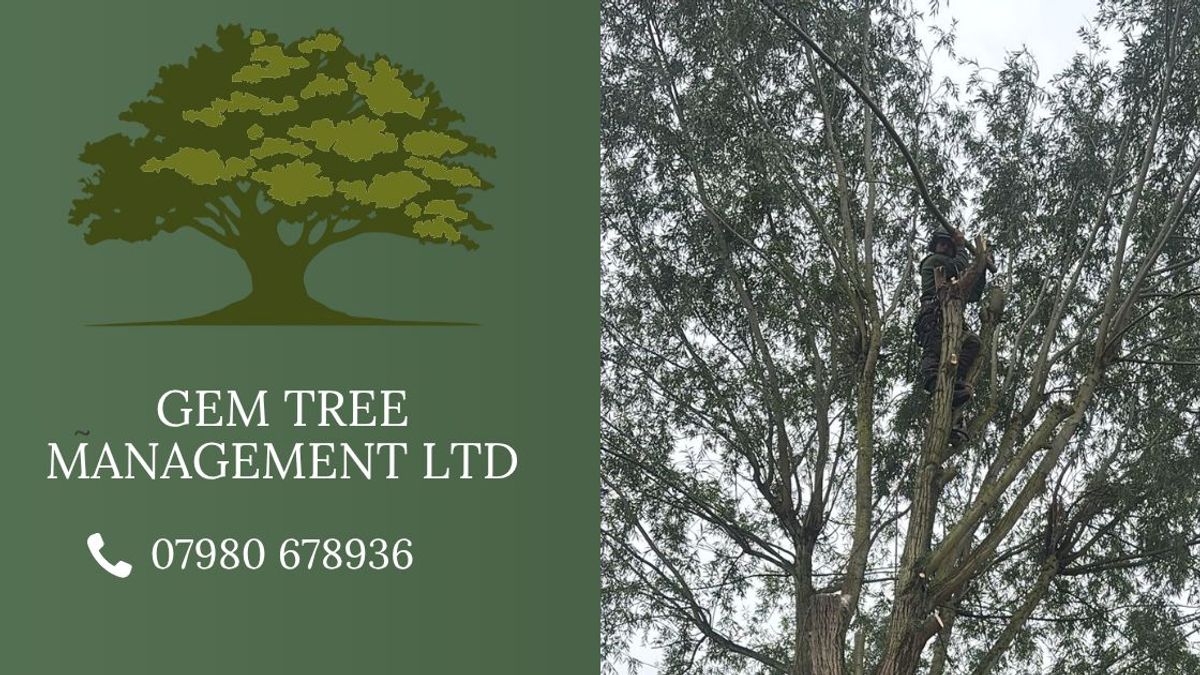
Nobody takes the decision to fell a tree lightly. Trees are living things, often old, often beautiful, often significant to the character of a garden or landscape. But there are situations where felling is the responsible, necessary, and sometimes only safe course of action. At Gem Tree Management, we approach every felling job with the seriousness it deserves: thorough assessment, meticulous planning, professional execution, and a commitment to leaving the site safe and tidy.
When is tree felling the right decision?
Felling is always the last resort. Before recommending removal, we'll always explore whether the tree can be managed, treated, or retained in some form. But there are circumstances where felling is clearly the right call.
Structural failure is one of the most common reasons. Trees that have suffered significant internal decay, root damage, or physical damage from storms may no longer be safe to retain, even with extensive management. Disease is another, ash dieback, for example, can progress to the point where a tree becomes structurally unpredictable and genuinely dangerous.
Trees that pose an immediate and unavoidable risk to structures, overhead lines, neighbouring properties, or people also need to be removed. And in some cases, trees are felled as part of site preparation for development, or to make way for new planting of more appropriate species.
The difference between a straight fell and sectional dismantling
Where space allows, a tree can be felled in a single controlled operation, this is known as a straight fell. The arborist makes a series of precise cuts at the base of the trunk, controlling the direction of fall using techniques and equipment developed over decades of practice. A clear felling zone must be established, escape routes planned, and the area made safe before the operation begins.
In the more common urban and suburban scenario, there isn't sufficient space for a straight fell. The tree may be surrounded by buildings, fencing, parked vehicles, planted areas, or other obstacles. In this case, sectional dismantling is required. The tree is climbed and dismantled from the top down, with sections lowered safely on ropes. This requires significant skill, the right rigging equipment, and experienced ground workers to manage the lowered sections safely.
The safety considerations involved
Tree felling is statistically one of the most dangerous occupational activities in the UK. The combination of heavy machinery, working at height, unpredictable materials, and time pressure creates a genuinely high-risk environment that demands properly trained, experienced professionals.
Before any felling operation begins, our team carries out a full site risk assessment. We identify overhead services, underground utilities, nearby structures, access and egress routes, escape paths, and any factors that might affect the safe execution of the job. We establish appropriate exclusion zones and brief every member of the team on their role.
This level of preparation is not excessive caution, it's standard professional practice. It's why experienced, qualified tree surgeons complete jobs safely that would be genuinely life-threatening for an untrained person to attempt.
Why tree felling is never a DIY job
Every year, people are seriously injured, and some are killed, attempting tree felling without proper training or equipment. Chainsaws are powerful tools that demand respect and skill. Trees under tension can behave unpredictably when cuts are made. Working at height adds another layer of risk. And the consequences of getting it wrong can be catastrophic.
Beyond the immediate safety risks, there are also legal considerations. If a tree is subject to a Tree Preservation Order or is in a Conservation Area, carrying out felling without consent is a criminal offence. And if an uninsured, unqualified 'tree surgeon' damages your property or injures someone in the process, you could find yourself liable.
For anything beyond the smallest garden tree, professional, qualified, insured tree surgeons are the only sensible option.
What happens after the tree is down?
Once the tree has been safely felled and dismantled, the arisings need to be dealt with. We offer a range of options: brash and small material can be chipped on-site, and you're welcome to keep the chippings for mulching if you'd like them. Larger sections of timber can be left as logs, useful if you have a log burner or know someone who does. Alternatively, we can remove all material completely, leaving the site clean and clear.
We can also arrange stump grinding at the same visit, dealing with the remaining stump in the same operation and leaving the area ready for replanting or landscaping.
We'll talk through all of this with you before work begins, so everything is agreed in advance and there are no surprises on the day.
Ready to book? Contact Gem Tree Management Ltd today for a free, no-obligation site visit and quote. Our team of fully qualified, fully insured arborists is here to help with everything from routine maintenance to complex tree surgery.